Belly: When a Hip-Hop Movie Becomes Part of Your Memory
There are movies you remember watching, and then there are movies where you remember where you were when you watched them.
Belly is one of those films for me.
Some of my earliest memories of the movie go back to around 2004, watching it at my Godfather Jorge's house in Inglewood. Some people know him as Bala or Bullet. He was a big DMX fan, and through memories like those, certain pieces of hip-hop became connected to actual people, places and periods of my life.
That is probably part of the reason Belly never felt like just another movie to me.
It felt like hip-hop had somehow escaped the speakers and taken over the television.
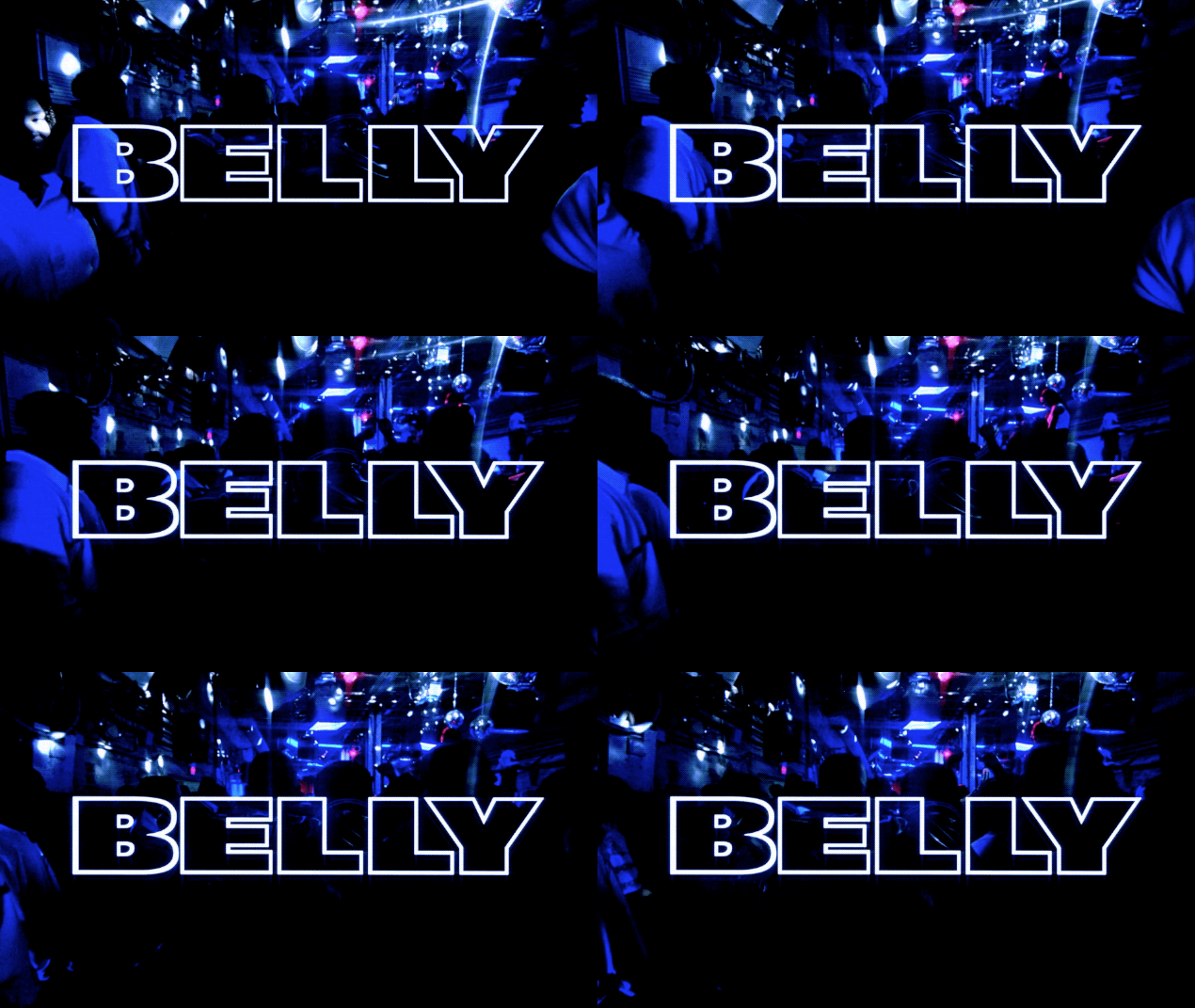
A Movie That Looks Like a Music Video
Director Hype Williams had already created a visual language for hip-hop through music videos, and Belly feels like somebody gave that language enough room to become a feature film.
The camera angles, lighting, composition, slow motion, saturated colors and shadows make scenes feel larger than ordinary life. There is blue everywhere.
That blue tint is one of the things I remember most.
It makes parts of the movie feel cold and gloomy, but that darkness adds something important. The world Tommy and Sincere inhabit may contain money, cars, jewelry, women and power, but it rarely feels warm.
Even when the characters appear to be winning, something feels wrong.
That contrast is important because Belly isn't simply presenting the fantasy of getting rich in the streets. It constantly puts that fantasy beside paranoia, violence, consequences and the possibility that eventually somebody has to decide what all of it actually means.
The movie looks beautiful while showing you a world that is destroying people.
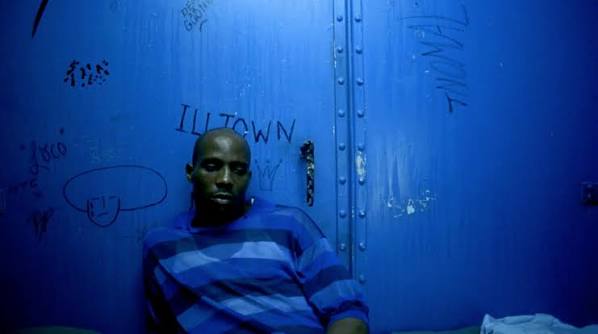
The Sound of the Opening Scene
Before the story even settles in, the opening sequence establishes that this movie is operating by different rules. The crew enters the club while the a cappella version of Soul II Soul's “Back to Life (However Do You Want Me)” hangs over the scene.
The contrast between that smooth vocal performance and the cold blue imagery gives the sequence a strange dreamlike feeling. Then the music and action shift, and the entire thing starts moving like one of Hype Williams' music videos stretched across a cinema screen.
Soul II Soul — Back to Life
The song heard in the opening sequence of Belly.
Tommy and Sincere
DMX and Nas were perfect opposites for the story.
DMX plays Tommy “Buns” Bundy with the energy of the hot-headed homie you want around when something pops off, but whose impulsiveness can become a problem when nothing is popping off.
Nas plays Sincere with a completely different energy.
He thinks. He observes. He questions where everything is headed.
Together they represent two reactions to the same environment. Tommy keeps moving deeper into the life while Sincere increasingly looks for a way beyond it.
That's what makes their relationship more interesting than simply having two rappers playing criminals.
They're childhood friends who came from similar circumstances, reached a level of success together and then began looking at that success differently.
Hip-Hop Built the Cast
Then look at everybody surrounding them.
Method Man. T-Boz. AZ. DMX. Nas. And Louie Rankin, the Jamaican dancehall artist who played Lennox, better known as Ox.
The casting makes Belly feel like a time capsule from an era when the borders between rap music, reggae, fashion, music videos and film were becoming increasingly blurred.
These weren't actors pretending to understand hip-hop culture from the outside.
A large part of the cast came directly from the music and culture the film was depicting.
That changes the energy.
Method Man's presence doesn't feel like some celebrity cameo inserted so a studio could put another famous name on a poster. He belongs in that universe.
The same is true of T-Boz and AZ.
And Ox became one of the movie's unforgettable characters. Louie Rankin brought an intensity and presence to that role that stayed with hip-hop audiences long after the credits rolled.
Rest in peace to Louie Rankin.
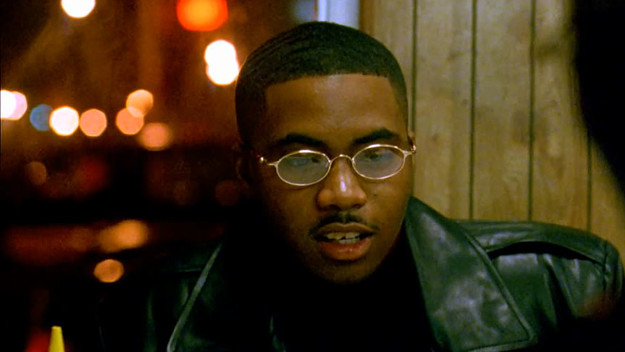
When “One Love” Became a Movie Scene
One of my favorite moments in Belly is much quieter.
Sincere approaches a young man sitting outside the projects and begins talking to him.
For anybody familiar with Nas' music, the scene immediately carries another layer of meaning.
It draws directly from the world Nas created in “One Love.”
That is one of the details that makes Belly special to me.
Nas had already painted these environments through words. His music could make you visualize apartments, project benches, conversations, incarceration, neighborhood politics and young people trying to understand the world they had inherited.
Then Belly takes elements of that storytelling language and gives them a physical form.
Now the environment exists in front of you.
The bench is there. The projects are there. The young man is there. Sincere is standing there talking to him.
It's art referencing art.
A rap record influences a film, while the film gives you another way of experiencing the ideas contained in the record.
Those connections are part of what makes hip-hop culture so deep. A record can inspire a movie. A movie can influence photography. Photography can influence fashion. Fashion can inspire graffiti. Graffiti can influence graphic design.
Nothing exists by itself.
Nas — One Love
From Illmatic, produced by Q-Tip.
Street Culture, Faith and Consequences
People sometimes remember Belly primarily for its style, but underneath all that blue light, jewelry, guns and cinematography is a movie wrestling with spirituality.
Faith runs through the story.
So does temptation.
So does the idea of transformation.
The characters aren't only trying to survive other people. They're eventually forced to confront themselves.
That makes the movie more interesting than a simple rise-and-fall crime story.
It presents the attraction of street wealth without completely separating that attraction from what comes with it.
Money comes with enemies.
Power comes with paranoia.
Violence creates more violence.
And eventually Sincere begins questioning whether survival means getting better at playing the game or having enough courage to leave it.
That's where the hope enters the film.
Not some perfect Hollywood version of hope where everything suddenly becomes clean and easy.
It's the possibility that a person can recognize the direction they're moving and decide they don't have to keep going there.
From Inglewood to the Screen
When I think about Belly now, I don't only think about Nas and DMX.
I think about being younger.
I think about Inglewood.
I think about sitting at my Godfather Jorge's house around 2004 and watching this strange, dark, blue world unfold on the television.
I think about him being a DMX fan.
At that age, I wasn't analyzing cinematography or thinking about Hype Williams' influence on the visual language of hip-hop. I just knew the movie looked different.
And sometimes that's how art gets you first.
You feel it before you understand why it works.
Years later, after spending more of my own life around music, graphic design, screen printing, photography and visual culture, I can look back at Belly and understand more of what attracted me to it.
Every frame feels designed.
Light has meaning.
Color has meaning.
Clothing has meaning.
Music has meaning.
Even silence has meaning.
It is filmmaking through the eyes of somebody who understood that hip-hop had already developed its own visual language.
Why Belly Still Matters
Belly doesn't have to be a technically perfect movie to be a classic.
Those are two different things.
Its importance comes from what it captured.
It captured an era when hip-hop was becoming powerful enough to create complete worlds around itself. The rappers weren't simply supplying songs for somebody else's movie anymore.
They were the characters.
Their fashion was the wardrobe.
Their language shaped the dialogue.
Their music informed the storytelling.
Their culture dictated the visual identity.
And Hype Williams photographed that world like mythology.
That is why decades later people still recreate the lighting from Belly, reference its opening sequence, quote its characters, discuss its clothes and study its cinematography.
The movie became bigger than its original release.
It became part of hip-hop's visual vocabulary.
For me, though, its importance will always be more personal.
Before I knew anything about filmmaking, color grading or visual storytelling, I knew there was something about that blue movie I watched at my Godfather's house in Inglewood that I couldn't forget.
Years later, I understand it better.
Hip-hop could create its own cinema.